
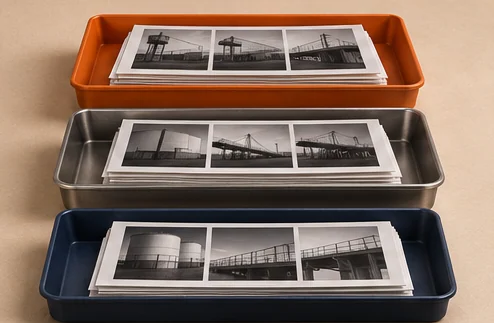
Split visual inspection datasets by physical unit and capture context before training. Keep frames, crops, retries, and alternate views of the same item together. Reserve a final set that reflects how the check will be used and keep it separate from settings decisions.
Determine the unit of generalization
A model can give a good result on a frame that looks almost like a training image. A different filename or timestamp does not make it new evidence. In a carton line, photos from a short capture burst usually share the same package location, surface texture, shadows, and label position. Assign the burst through a parent unit identifier before the images reach any split.
Think about the change the deployment needs to handle. If the goal is to evaluate another shift with the same setup, the set needs a distinct shift or time period. If a new supplier lot may arrive, hold out some material lots and keep the shift conditions represented. If the model is meant for more than one station, evaluate those stations separately and keep track of whether they share workers or identical fixtures.
| Fictional relation | Group by | Reason |
|---|---|---|
| Three views of the same carton | Physical unit | Every view shares the actual label position |
| Multiple crops from one image | Source image and unit | Overlapping crops expose part of the same image |
| All samples from one supplier lot | Lot, when new lots are the test | Surface finish could be distinctive for that lot |
| Challenge examples copied into a review folder | Original source group | Changing location does not create independent evidence |
Reserve the final set before tuning
Use training examples to fit or create a check. Use a development set to adjust things such as an image quality rule or a score threshold. Use the final set once the candidate and rubric are fixed, to assess the resulting decision. Google’s dataset splitting guide describes this general separation. The grouping policy for an inspection set depends on how the images were captured.
If a project lead reviews the final errors and requests a parameter change, make sure the revised check is compared on a fresh final group. The prior set becomes useful for diagnosis and regression, but it has influenced decisions. Document the version of images, settings, and rubric in both runs. This maintains a defensible record when the number of difficult cases is small.
Inspect coverage rather than trusting a percentage
Count units, images, and reference outcomes by condition after assigning groups. A split with 20% of images might contain only one relevant defect if a large burst dominates it. Likewise, a 20% split could have a disproportionately high number of reflective packages because of the order in which units were collected. Change the grouping assignment before model development if the final set cannot answer the planned question.
With rare defects, keep the observed evidence and its limits. If a fictional set contains two reference defects for glossy cartons, splitting those into different sets does little to measure generalization. Preserve a separate challenge case record, use a meaningful subset for feasibility, and collect more appropriate units for the release decision. Avoid duplicating the rare cases just to make an evaluation cell look larger.
Preserve and audit the manifest
Record each image identifier, parent unit, session, relevant conditions, reference label version, and assigned split. Review repeated identifiers and obvious near-duplicates before training. Where an image came from a crop or a resized output, preserve its source link. Keep any promotion or removal of test cases in a revision log.
Hand the manifest to a second person and ask them to trace one error report entry to its source group. Confirm that each result is measured against the expected version. The holdout split checklist covers the common leak paths. The pilot evaluation guide shows how to report the eventual test result.
Write the claim the final split must support
Start with the smallest claim you want to make after evaluation. The check may need to work for another unit from the same setup, a later lot of the same material, or a different station. Those are three different tests. A test set that draws random frames from one run can show how the check handles varied images from that run. It provides weaker evidence about a new run if the camera, fixture, defect preparation, and products were nearly the same across all frames.
Agree on what can vary within the approved scope. A position check may use a stable fixture across two shifts and two cartons. A surface check may rely on one finish, light position, and target region. Write the relevant groups next to the proposed claim. Keep future product types and materially different setups identifiable. The project can gather exploratory evidence about them and still preserve an evaluation question tied to the narrower approved scope.
Name the decisions people will take using the development set. They may choose the camera view, adjust a crop, compare a geometric rule against a learned method, tune the score threshold, or rewrite part of the annotation rubric. Any examples used to make those decisions carry tuning information. Keep a final independent group out of that process and record which decisions were based on each preceding group. This approach helps the owner interpret the reported results and recognize when another holdout is needed.
If the intended result involves a physical workflow, include evidence of the whole workflow as well. Replaying stored images can estimate clear, flag and review behavior. It cannot measure how the actual queue responds to a burst or whether a recaptured unit reaches its owner on time. Plan an independent line rehearsal for those decisions. Keep the image evaluation, threshold selection, and operational rehearsal as related activities with their own denominators. The pilot evaluation guide connects them to the actual approval record.
Build groups from the relationship that could leak information
Use a stable physical unit identifier for all frames and derivatives of the same unit. Related views of a particular carton share exact print, crease, dust and positioning details. A model may appear to generalize if the same carton appears in a different crop on both sides of the split. Keep the original, crops, flipped images, resized exports, and labels together before assigning a partition. The capture metadata guide describes a manifest for those relationships.
Some adjacent units share more than the run label suggests. A capture string might use an operator-created fault that is repeated with the same marker, or contain a burst before the same fixture adjustment. Decide whether these examples need to remain together based on the intended test. To evaluate generalization to other independently created failures, reserve separate preparation batches. To evaluate a normal shift, reserve intact production windows so the results include different setup conditions and correlated behavior.
Do not force one useful group ID to carry several meanings. A physical unit can belong to a material lot, capture event, station, camera view and repeated reference set. Preserve each field. Then define a split group that prevents overlap along the dimensions relevant to the test. For example, use the physical unit plus all descendants as the minimum group. Reserve entire lots for a material generalization test. If groups connect because of shared reference units, keep those reference units in a comparison lane that does not contribute independent performance counts.
Build a plan for unknown identities. An image that came from a folder of reused reference parts may lack a unique unit ID. Similar filenames can be a clue rather than proof. Retrieve the manifest, capture time, or approved project notes where possible. If relationships remain unclear, keep those files out of the strict holdout or maintain a conservative group that prevents likely overlap. Record how many held-back cases that decision affects. A smaller independent test can tell you more about an intended claim than a large test with undetected overlap.
Follow a fictional sequence from folders to usable splits
Imagine a team has 300 cartons from two runs. Each carton has a full frontal picture and a cropped label region. The camera emits three frames during a capture burst. There are 1,800 image files if each of the 900 acquisitions yields one crop. The actual unit count remains 300. An image-level split risks assigning one of a carton’s files to training and another to testing. Counting file results as independent can also overweight the units with the most successful exports.
Start with a table whose primary entity is the carton. Link each acquired frame and derived file to its source. Mark the current setup, run, material lot and reference decision. Suppose the first run includes 180 cartons from lot A and the second includes 120 from lot B. If you need to evaluate a new lot, hold out the entire second lot before testing its condition. You can use the first run for feasibility and internal development. The arithmetic of an 80/20 image split would imply a different experiment and can put examples of both lots on both sides.
Suppose both lots are intended for ordinary use, and the second is already familiar to the people tuning the check. In that case neither is a clean test of a future lot without an independent group. Consider gathering fresh units from a third lot, recording material and setup differences, and limiting the scope to the evidence from the first two until that group arrives. If the team only needs a test on fresh units within existing lots, it can reserve separate run windows and keep the claim there. Say exactly which unseen variation was tested.
Protect rare conditions within the plan. Imagine the second lot contains many accepted units and only two confirmed off-position labels. You can retain it as an ordinary case-mix test and add a separate independent challenge set with known defects on comparable stock. Report both. Combining a challenge test with the ordinary group can produce a single neat percentage whose denominator mixes two sampling purposes. Hold exposure, presentation, and class definitions constant where you can. If you cannot, record the scope difference and compare each set on its own terms.
Preserve deterministic records without relying on percentages
Choose a splitting procedure that others can reproduce. A documented seed can help rebuild a random group assignment but does not define which raw units were available at the time or how their labels changed. Save a manifest with stable unit or group ID, assigned purpose, known condition, date and the underlying file references. Record the version of the rubric and preprocessing pipeline if those choices affect evaluation. Include the rule for adding subsequent groups.
Use target percentages only after checking counts for important conditions. A conventional training, validation and test ratio is a planning tool. The appropriate size depends on the number of independent groups, rare defects, the scope claim and what you need to estimate. A 20% final sample could be too small for a specific material group, even when it contains many units overall. Calculate unit counts by condition and class. Where group boundaries prevent balance, note which coverage gap needs a new capture.
Gate use of the comparison. When you can compare two candidates against independent data, ask which version saw which labels and which split decisions changed after launch. If the adjustment is based on reading the holdout outputs, record it as new development. Freeze the candidate and gather another independent evaluation if you need a fresh confirmation. When few samples are available, say what the experiment established and preserve the evidence gaps in the pilot acceptance worksheet.
Write down the basis for any manually constructed partitions. A team may reserve a complete period because it captures an expected changeover or known problem. That targeted evaluation can be useful. It represents that period and its conditions. Another set chosen for known failure diversity can provide contrast. Label the distinction so a later owner does not interpret those results as the rate across a full quarter. Preserve the dates and reason you deliberately selected those observations.
Use grouped validation during development
When you have several independent runs but few units in each, a grouped development comparison can use the available data efficiently. Assign each run to a group and, for each fold, train on some runs while evaluating on the others. Each development trial should keep a whole group on its assigned side. Compare metric variation across folds and look for a single condition driving the spread. A mean alone can hide one run whose setup differs from all the others.
Avoid carrying information from the evaluation fold into the fitted steps. Learning a normalizer from all images or selecting a crop by looking at difficult cases throughout the experiment gives the decision more information than a held-out fold is intended to provide. Separate fitted transformations from fixed business rules. If a fixed specification describes the package datum and target, it can define the task in all folds. If team members choose a crop by inspecting recorded folds, freeze their decision and evaluate independently afterward.
Consider how practical a grouped evaluation is for a scarce defect. If one run has all examples of an important failure, the fold that holds it out may leave development with no examples of that type. The result shows a coverage problem for learning that requirement. It won’t disappear by distributing near-identical frames from the same defective unit across folds. Capture another group of representative independent failures or preserve a rule-based or manual decision for that condition while it lacks evidence.
Record what would change the result. A fold performing poorly on new gloss stock can prompt a paired material comparison. A run with no defects can establish cleared and review behavior but does not estimate recall on a defect class. A run where the required image never arrives can reveal a capture or workflow problem. Compare metrics across the sections of evidence where denominators exist. Keep the applicability statement beside the rates. Refer to Google’s dataset splitting guidance for general development and test-set roles.
Audit the split in layers
First check identifiers. An intersection between physical unit IDs across training and evaluation reveals overlap if IDs are stable and correctly scoped. Verify whether IDs can restart after a shift or are only unique within a station. If so, use the appropriate full key. Find derived records whose source is assigned to another split. Compare both counts and sample files. One repeat linked incorrectly can be an indicator of a systematic export issue.
Then check exact and near duplicates. A checksum can identify identical bytes. An identical photo saved under another compression level or crop may have different bytes. Compare source links, timestamps, known capture groups and a sample of similar images. If the analysis identifies candidate duplicates, have a person review the intended group relationship before moving files. Two ordinary units can look almost identical. The key issue is whether the evidence is independent for the claim. Preserve the result of the review so a future run can understand why a pair stayed apart or together.
Inspect adjacent time windows even when physical unit IDs are different. For example, a fixture test may hold a row of similar prepared cartons under a stable work light, then take a repeated run immediately after resetting the camera. If the same preparation method or operator annotation affects all units, a test using that run may answer a narrower question than the final claim. Record the group and decide whether the boundary must move to an independent capture period. Keep connection metadata from the raw collection.
Finally check decision leakage. Look at the notes, analysis paths and artifacts that preceded each model or rule version. A person reviewing the whole holdout might discover that the worst cases are glossy and choose a new threshold just for gloss. That is legitimate development reasoning. The original holdout no longer supplies the same independent confirmation for the updated rule. Retain its evidence as the reason for the change and choose a genuinely independent confirmation set for the claimed scope. Use the holdout split checklist as a shared reminder in the decision review.
Compare challenge evidence and production evidence
Build a challenge set around protected failures and defined boundaries. A label position check may need examples displaced horizontally, vertically, or at a rotated corner. Capture some clearly acceptable and closely borderline examples under the same materials and poses. Include conditions chosen independently of the development examples wherever possible. The point is to learn whether the check can handle those examples using its documented inputs. The challenge’s class mix comes from the evaluation plan.
Keep an ordinary production sample with a defensible basis. You might take all units in several preselected windows and follow what happens to their initial and final decisions. Document whether a shift or format is missing. If some units are sampled at higher frequency, state that when reporting the result. Use the ordinary sample to estimate observed volume, review share, and handling time within its scope. Use the challenge set to assess specific protected cases and identify failure conditions.
For illustration, imagine a fictional challenge set has twenty deliberately placed bad labels and twenty acceptable labels. A check flags eighteen bad labels and three acceptable ones. The fraction of flags that are true defects in that set describes its challenge mix. A separate ordinary sample might have far fewer defects among 400 units and a different fraction of flags that correspond to defects even if the conditional rates were similar. Report the basis beside the numbers. For the protected failures, show the missed cases and conditions. For staffing, count the alerts and reviews that actually arrive in the production sample.
Use the same frozen version and record the same result categories across both sets. If settings differ, describe why. A challenge replay might display a higher resolution original than the live process sees. In that case the two tests differ in observation as well as class mix. Run a targeted comparison where the source resolution and original capture route match. Give the decision owner both the evidence and the limitations they need to decide whether to keep the existing process for a condition.
Keep genuinely independent evidence after a change
Protect the final set from ordinary iteration. Record when it was frozen, who saw it, and what versions were assessed against it. When a new type of product arrives or the view changes, capture independently in the new setup. Use the earlier set to check whether protected existing conditions stay intact. Decide which items can support comparisons across versions and what new scope needs separate evidence.
Make corrections traceable when evaluation reveals an annotation problem. An owner may confirm that a reference applied the wrong product revision. Preserve the previous annotation, correction, evidence and time. Recompute affected comparative metrics on the same corrected data. If a new rule changes what the requirement actually means, register that change and establish a separate confirmation plan. A legacy set can remain valuable as an audit record even when some labels cannot be compared directly to a new scope.
Test retrieval before relying on the frozen split. Ask a colleague to find the stored image, actual reference, derived view and version for a known held-out unit. Confirm whether further crops were created only under the assigned split. Run the same overlap check after imports or conversion. A folder called test can accumulate untracked files if a pipeline appends artifacts without preserving group identity. If the test manifest does not match the current files, resolve the discrepancy before claiming independence.
Finish with a handoff that identifies which files support feasibility, threshold choice, final performance and the operational workflow. Point out any condition whose evidence changed or remains insufficient. Give the next analyst a clear way to add new examples without shifting the basis of earlier comparisons. Use the sample image checklist to record which evidence to collect next and keep the final assignment attached to its unit groups.
Check whether balancing creates a different experiment
Decide what you are balancing. A development set may deliberately show many borderline defects to support training. A final evaluation may need separate groups for routine performance and rare cases. When groups are indivisible, balancing can conflict with keeping related units together. Preserve the group boundary first, then describe the resulting class and condition counts. If a protected cell is empty, changing the fraction cannot add evidence about it.
Imagine a fictional protective tab check with three lots and two formats. In the smaller format every accepted unit from the first lot has a cream tray. Most of the defective cases are deliberately prepared on an orange tray from the third lot. Random grouping by physical unit stops identical frames appearing across splits, but both splits may retain the material shortcut. If the label tells the project that the color class is the defect, the test could reward a rule that would make the wrong decision on an acceptable orange tray. Include accepted and defective examples within each relevant stock, or state how the imbalance limits the question.
Cluster related captures so any intervention appears in context. For example, all prepared defects might have been photographed after a lamp shifted. Record that capture change before assigning data. If you can capture paired acceptable and failing examples with the same setup and stock, use that contrast to check whether the target feature remains informative. If the only evidence of a rare defect belongs to one special training condition, keep a separate challenge rather than assuming performance on ordinary stock.
When describing balance, report both unit and group counts. Twenty independent acceptable units spread across four groups provide different evidence about group variation from twenty units in one fully controlled run. A split can have equal class counts and little diversity of runs. A split that includes disparate groups can have unequal class counts but reveal a real scope gap. Bring the table to the quality owner to identify which groups matter most. Decide whether collection or narrower scope will close the gap.
Handle time changes without moving the target
Use time-based splits when the operating question follows a sequence. A later interval is useful if the team wants to evaluate a change introduced after development or a typical later run. Record planned dates and which changes actually occurred between partitions. Check whether the later setup matches the scope. For example, an unapproved fixture may appear in evaluation because a maintenance change occurred. Keep that event visible and decide whether it is an intended stress condition or a departure requiring separate evidence.
Watch for features or records that become available only after the decision. If a current downstream status indicates that a unit passed manual review, feeding it into the automated inspection replay gives the method information it would not have at capture. Evaluate with only the evidence available at the decision point. Keep post-inspection observations as reference outcomes, audit evidence, or workflow results. Mark timestamp sources and time zones if a handoff crosses systems that log different clock values.
Take a fictional run split at noon. The same reference carton is deliberately captured each hour before and after noon to show whether the camera moved. Those repeated images are helpful for diagnosing the transition. They are dependent observations of a single physical unit. Use the noon series as an optical baseline and exclude it from the independent unit counts. Evaluate the method on new production units across the later interval. If no protected defects appear there, collect a separate later challenge set and show both types of evidence.
Freeze the boundary before comparing performance when possible. Moving it because an unexpected fault falls into the validation interval can skew the reported result. If records show the interval was assigned incorrectly, preserve the adjustment and reason. If you need to investigate the fault, use the data to learn and gather an independent repeat after choosing the change. The trial remains valuable evidence when the report states the role the data actually played.
Check case eligibility together with group integrity
First write down the eligibility rules. A valid inspection result may require a known unit, approved format, matching view and settled reference disposition. An operational exception review can include unusable images with known routing outcomes. A pilot can run both comparisons from the same collection using different eligibility rules. Record every excluded unit and reason so the analyst can reconstruct what each denominator contains.
Test the eligibility filters on a small hand-picked group before exporting. Include an approved carton with two valid captures, a carton whose datum is off frame, a capture without a reliable unit ID, and a near-boundary sample whose reference is awaiting review. Verify both its eligibility and which group stays together. If the image needed for a measurement is missing but the unit has a good overhead image for a different requirement, keep the two check-specific decisions distinct. The image usability rubric supplies a starting point for the evidence gate.
Look for accidental filtering after assignment. A classifier’s input pipeline might reject a damaged file, or an export might omit samples with multiple annotations. Record the difference between cases intended for evaluation and cases actually processed. Group the missing records by reason and condition. A high post-filter accuracy can overstate usefulness if unreadable files were removed without inspecting their effects on the line. Preserve the rate of incomplete capture and test the alternate path separately.
Review whether the same preparation logic applies on both sides. Fixing the orientation of development images by hand while leaving later records uncorrected can produce an unintended difference. If the real pipeline applies that fix consistently, include it in replay. If the real pipeline cannot, use the view as captured or define the scoped change and test it. Record the parser version and transformation steps with the manifest. Separate practical differences caused by capture from errors introduced by dataset processing.
Give the reviewer a concrete sign-off exercise
Ask a colleague to rebuild the evaluation list from the fixed manifest and find the files for three cases. One should have more than one view. One should belong to a protected condition. The third should have needed a reference correction. Verify the case IDs, group assignment, and eligible evidence against the source. Ask which versions could have seen those cases and how the records establish that.
Next show a few examples that did not enter the test. Explain whether they were used in development, kept for a release rehearsal, or withheld for insufficient evidence. A future comparison may need to reuse some of them for diagnostics while obtaining a fresh confirmation set. Give the reviewer a procedure for new groups arriving during development, including who decides their assignment. The barrier matters most when the next dataset gets larger or changes hands.
Ask the colleague to check the split on a fresh export too. If an approved derivative appears with no source link, keep it out of the final comparison until someone explains its identity. Compare the frozen list with the expected physical units and note any exclusions. Even a correct first assignment can drift as teams save new versions into shared folders.
Close with a small acceptance record. It should describe the claimed scope, split level, final set’s date, condition and class coverage, tested check version, and the person who owns any exception. List the remaining uncertainty and the specific new evidence needed. For example, a project can finish its test of previously approved stock and defer another lot because its reference outcomes are still pending. Schedule collection for that lot without rewriting earlier test results. Use the pilot acceptance worksheet to keep that decision alongside the evaluation results.