
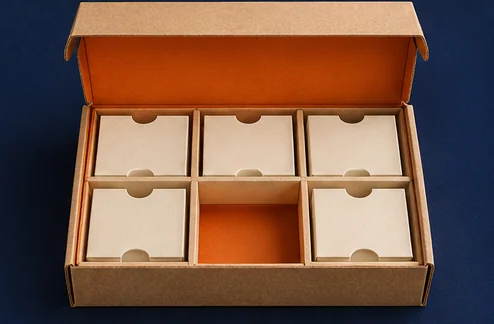
Verify packaging completeness at a point where the expected parts are visible. List the pieces and counts the image can establish, and route obstructed views to another capture or direct inspection.
Pick the stage before a feature disappears
Draw the package at a few stages of assembly and packing. Indicate which parts are still visible at each stage and which new parts a later step adds. If a booklet is covered by a tray, an image of the closed package cannot establish the booklet’s presence. Consider a capture before inserting the tray or use separate evidence appropriate to the production process.
Name the requirement by format. A fictional small accessory carton might require one clip, one booklet, and one molded insert. A promotional carton might include two clips and a different divider. Put the correct bill of materials beside the approved view. Use the interaction between expected counts and orientation to test whether a difference is actually a missing part.
Reserve “unknown” for occluded or missing evidence
An empty visible slot provides evidence of absence when the part should sit there. A slot hidden by a flap cannot support that conclusion. Teach reviewers to mark which location is visible and what view would resolve the uncertainty. Include at least one ordinary obstruction in the pilot, such as a folded instruction card that lies across an insert recess.
| Fictional condition | What the image supports | Process action |
|---|---|---|
| Both clips visible in their assigned slots | Two clips present in the field of view | Record the check result against the unit |
| One open, clearly visible clip recess | Missing visible clip candidate | Route the example to the designated reviewer |
| A booklet covers the second recess | Second slot unreadable | Request the approved alternate view |
| Carton already sealed | No direct visual evidence of contents | Use another approved evidence source |
Exercise wrong-part and mixed-format scenarios
A part may be present while the wrong component occupies the expected location. Decide whether the pilot should answer presence, product variant, or both, and give the evaluation set a corresponding reference. Add examples of accepted substitute colors and wrong components of a similar shape. Use a recorded rule to check when a hidden identifier requires human judgment.
Physical handling also matters. Try moving the carton into and out of the frame as an operator usually would. Check the units the camera can see while the previous package remains nearby. If a picture captures two boxes, specify which one is the subject or route the record back for an identified capture. Pair results with the unit reference before making a disposition decision.
Review exceptions under normal throughput
Evaluate visible missing parts, accepted variations, and cases where an operator must recover another view. Record how many cases fall into each class and how long it takes to recover evidence. Avoid interpreting a reduced review rate as better when a borderline reason was silently bundled with pass results. Examine the individual changes in decisions.
The presence check list can hold one record for each part and view. Share the rubric with a line lead, then ask that lead to use it on a trial pack at normal pace. For existing industry examples of packaging presence and visual classification, see Elementary’s packaging inspection overview. Choose the scope and review process for your own packages.
Choose the last point at which the item is still visible
Walk the pack sequence from components laid out at the station to the moment the package can leave. For each required item, record where it is visible, where it moves, and when it can still be changed. A leaflet may be clearly seen on an open tray and completely covered after a divider is placed. A bottom spacer might be gone from view before a later check that sees the rest of the kit. Capture the evidence at the earlier point or use an approved independent method for the hidden part.
Pick a station moment that also supports action. If the image is captured long after the carton has joined other units, the operator may struggle to identify which one to stop. A fast decision has little value when it reaches the team after a package becomes inaccessible. Trace how the package and its record travel through the line. Determine the practical deadline for an automatic result and the separate time allowed for someone to handle an exception. Make the timing part of the decision record and test it during a real-paced rehearsal.
Work backwards from the completeness statement your team intends to make. Suppose a fictional kit needs a tray, an accessory, a specific insert, and an exterior closure. A camera before closing can establish the first three only where the required characteristics are visible. A later closure view can establish the exterior condition in the supported setup. The team can combine findings if it has reliable unit identity and a process that prevents an unobserved change after each view. A record missing the evidence for any required component needs the documented fallback.
Look for steps where evidence can be lost between views. The camera might read a temporary tray identifier that stays at the station rather than going with the finished package. An operator may replace a damaged carton, swap two trays, or take a package off line for rework. Decide how the tracking system preserves or invalidates earlier evidence in these events. Confirm the revised record with the closed package in hand. Treat the join between station results as its own part of the pilot.
Build a requirement list an operator can interpret
Ask the quality owner to specify the expected components and acceptable options for each supported format. Write the names as people use them at the station and include a reference identifier when one exists. Document whether each row is about a component being present, its exact identity, a count, a location, an assembly orientation, or a readable printed feature. Each one needs evidence appropriate to its requirement. A large blue item in a tray might be enough to establish the presence of a blue retainer. It may be inadequate to distinguish two visually similar retainers with different dimensions.
Include approved substitutions for the format and the conditions under which they may be used. An alternate spacer that looks different in a photo could be legitimate in one configuration and an error in another. Preserve who approved its use and when that approval applies. A general list of everything the company has used will not tell the station which package is complete today. Make the component and configuration data available to the check and to the people who resolve exceptions.
A description should be tied to a visible feature. “Correct hardware” leaves the reviewer to guess what to look for. A known bracket can be evidenced by its geometry, a part code visible in the supported view, or another authorized source. If two options cannot be distinguished from the image, declare the limitation and use a separate method where exact identity is required. If an operator has to remove a sealed bag to find the answer, that action must be part of the approved process. Otherwise, the review should keep the unit in its unresolved state.
Write the inclusion rules for optional and extra items. An instruction card may be required only in one sales region. A surplus component can itself make some kits nonconforming, particularly if it indicates the contents of two boxes were combined. An unrecognized item can create a different review need from an empty slot. Show those situations in the reference set. Record whether the check concludes “all required visible items found,” “expected count or option confirmed,” or a narrower observation that the final pack review uses.
The packaging completeness solution outlines where a pilot can help. Pair it with the presence check list to write down a real view and a separate action for missing evidence. Put the current product instruction version on the worksheet so changes in allowed options do not get mistaken for errors in the camera setup.
Keep configuration identity linked to the physical pack
Imagine a fictional line that packs classic and extended versions in similar cartons. Both contain a tray and leaflet. The extended version needs a cable with a black sleeve. The classic version has a plastic cap in the same bay. A check that recognizes an object in the bay can cope well with a missing component, yet leave the operator unable to tell whether an extended pack contains a cap instead of a cable. State separately what should be recognized and which format requires it.
Establish how the configuration reaches the station. Some lines provide an order or recipe from another system. Others rely on a barcode, carrier, operator selection, or an assigned lane. Give the evaluation team examples of normal format selection and the known exceptions. A blank field after a restart, a mixed stack of cartons, an incomplete lookup, or an operator who changes formats while a previously captured item is still in review can all make a visually correct match irrelevant to the actual order.
Use one durable identifier for the current unit or record an approved method for linking multiple captures. A conveyor timestamp may help reconstruct a short span but can be unsafe as the only key when frames are delayed or units are pulled aside. Keep observed identity and expected identity as separate fields so the team can find a mismatch. Include the component list version and any selected alternate view in the evidence. When a different package takes the place of the original, recover the new identity and revalidate the parts affected by the change.
Create a test that proves the handoff works. Put two otherwise similar units into the station in quick succession, with different product configurations. Hold the second result long enough that it arrives after the first has moved. Then simulate a reinspection of the first one while the second is still visible in the review tool. Ask the receiving shift to identify the right physical item using its usual information. A design that only succeeds while the test operator remembers the order needs stronger linkage.
Prepare the capture around component boundaries
Study what the image needs to show at the time of capture. A single top-down view can reveal when compartments are occupied. Certain inserts can mask smaller objects beneath them. A shiny pouch can reflect colors from an adjacent bay, and compartments without a part can sometimes include a painted outline that appears occupied at low resolution. Look at cases where all objects are present and cases with a missing item at the same angle and under the same light. Inspect the raw images and any crop the software actually sees.
Consider whether you need an image before and after a packing step. An earlier view can establish an accessory in its slot. A second view can confirm that the divider is seated. Using multiple views makes the inspection more useful only when both views can be connected to the same unit and their freshness is clear. Keep the range of valid time or events between them. If the accessory could be moved after the first image, use a final observation or another process control to handle the risk.
Match the view to the expected appearance. Count checks need enough separation to tell individual items apart. An identity check may need a connector shape, a printed code, or another feature that remains visible under approved placement. Orientation may be defined by a keyed end or asymmetric edge. Choose a frame that contains the physical reference and the relevant feature. Match lighting to the material and run the comparison at the pace where the check is intended to work.
Take responsibility for evidence that arrives too late or is incomplete. A consistent problem might require a different capture point, extra view, reduced supported scope, or an independent manual check. Evaluate the tradeoff using both the new evidence and the team’s real ability to retrieve and handle the unit. A second view that requires every item to wait through an unstaffed recapture station can create more disruption than the original manual procedure. Where an alternate view is feasible, demonstrate it with both compliant and noncompliant examples.
Test deliberate look-alikes as well as obvious omissions
Start with clear examples of a correctly packed box and a box missing each of its required visible components. Then add cases that could produce the same picture or the same coarse finding. Put the correct insert near the wrong tray slot. Add the alternate insert used by a different order. Turn the correct component so its identifying feature disappears. Introduce a light reflection into an empty slot. At normal pace, evaluate how often the software distinguishes these cases and where it asks for more evidence.
Use approved representative items from actual production when available and separate intentionally staged examples. Staging a missing cable is an effective way to prove that a protected example is caught. It does not measure the frequency of missing cables during normal operations. A staged group can give broad coverage of component-level errors. A routine selection can help estimate how many otherwise normal units will need attention. Keep both groups identifiable so a combined percentage does not misrepresent what the pilot measured.
Plan the paired cases before tuning. For an opaque pouch, compare correct contents and incorrect contents with a sealed exterior that looks the same. A useful finding is that the camera cannot support that decision in this view. For two clear pouches with overlapping components, try an earlier or more stable view using the same items. Preserve the original failure so the final plan documents the visibility problem and the actual method that resolved it.
A stacked part can produce a clean-looking row while concealing count. In a fictional supplement kit that uses two flat washers, one washer directly over the other can look like one common outline. A layout fixture that separates washers before imaging gives the count observable meaning. If the station cannot expose both items, evaluate a separate quantity check using its own method and limits. Never turn the presence of one silhouette into evidence of two parts without a validated way to distinguish the states.
Create a bench trial with actionable expected results
Make a small casebook before line testing. For each unit, record the requirement, authoritative configuration, known reference outcome, conditions, expected software observation, and expected next action. This helps separate recognition from operations. A confirmed missing item and an unreadable view can both use the same physical holding location, while their reasons and resolutions differ. The first needs a packing disposition. The second needs evidence retrieval or a separate inspection method.
Place several representative sample types in the trial. Include known complete packs, ordinary material variation, and deliberate missing or incorrect parts. Include configurations with optional content, borderline visibility, and evidence of a different product. Then add a few processing incidents, such as a dropped frame, a late result, an unavailable recipe, a duplicate exposure, and a package removed for rework. These test state transitions that normal score evaluation often misses.
Have one person prepare the reference answers and another use the resulting images without knowing the prepared order. Compare their ability to recover the reason for the result. Where people disagree, preserve their observations. An item may be hidden, recognizable only from one view, or governed by an unclear product instruction. Correct the documentation or evidence before assigning an unambiguous final reference. The annotation rules guide explains how to keep multiple observations and a defensible reference decision.
Agree on the equipment and staff limits before expanding. At the bench, a reviewer may have time to zoom into every frame or open the physical kit. At line pace, the same activity can outlast the time the unit remains available. Measure realistic retrieval and decision time and compare it with staffed capacity and isolation space. Rehearse what happens when the preferred method is unavailable. Seeing every component in a photo is only one part of the release decision.
Evaluate at line pace and retain the unit outcomes
Keep the same reference rules for the held-out evaluation. Collect observations from routine units and compare them by product format, time of run, material, and view where these are relevant to decisions. Record enough information to see where the method is supported and where the evidence is thin. A format that takes twenty images of a single reusable test unit contributes a useful repeatability check. It contributes one independent unit to a claim about variation between packages.
Use counts alongside rates. Separate confirmed incomplete packs the system cleared, complete packs flagged as incomplete, and packages sent for review or recapture. Report the denominator for each statement, including the count of known incomplete samples and the count of ordinary units with a review event. For packages with several required components, record component-specific observations and a single unit-level release action, so a pack missing two pieces does not become two released failures in a unit report.
Suppose a fictional evaluation captures 300 units of one format. Eight are deliberately staged with a known omission. Each of those eight goes to a hold. Fourteen routine units also go to review because the flap partially covers a required bay. Those results support a narrow statement about the staged omissions and how often the routine units required review in that evaluated group. They say little about routine omission prevalence. Before automatic release decisions, challenge the flap condition on independent units and establish an accepted handling path for packages whose evidence remains obscured.
Preserve alternate views and identify how they contribute. If an earlier missing-looking case resolves to a clearly present part after recapture, keep both observations and note whose action allowed the second view. Calculate separate figures for initial automated routing and final decisions after human or recapture intervention. The initial rate helps estimate workflow load. The final outcome helps analyze product handling and the remaining unresolved cases. The two measurements answer different operational questions.
Report the most informative false clears and false holds by condition. Trace their likely causes through image, method, reference rule, and physical workflow. A missing insert that was never visible and a clear image of an empty slot misclassified as complete call for different next tests. The guide to reporting errors by condition provides a way to turn a case group into a controlled comparison.
Specify decisions through rework and repacking
A completeness result should follow an item through the next authorized action. If a staff member adds a missing component, document the rework and require the appropriate new observation. The original picture shows why the unit was held. An after-rework picture shows the corrected state in the scope of the check. Keep their timestamps and roles visible. Attach the final decision to the actual physical unit or to the explicitly linked replacement when the package receives a new identity.
Determine which previous evidence remains valid. Replacing a damaged exterior carton may leave some inner contents unchanged when the operation has documented controls. Removing a divider, exchanging a pouch, or taking a tray out of the queue can affect several previous decisions. Identify which product changes invalidate which observations. Have the owner confirm the reset rule in the pack instructions. A green indicator from another station should not automatically carry across a change in the item it describes.
Include an exception for untraceable units. If two held boxes are mixed and it is no longer possible to tell which had the missing part, the response may require fresh inspection of both under the approved method. This is a workflow event that belongs in the quality record regardless of how well the recognition system performed. Review how physical locations and identifiers are attached during transfers. Place a non-sensitive example in the shift handoff so the next team can reproduce the resolution.
Check that status updates can arrive safely. If an earlier image reports an incomplete kit after the receiver already inspected corrected contents, preserve the historic result without replacing the more recent validated disposition. Use event identifiers and authoritative state rules to avoid reopening or clearing the wrong package. Reconcile the physical hold location and digital status at closeout. Keep owner authority and any manual decision clearly recorded.
Work through three example packaging sequences
The examples below are fictional. Use them as exercises for linking a visible condition to the right action. Each one changes a different part of the pack procedure. Run through the unit sequence with the person who will receive the first unresolved case. Ask who owns that case after a delay, shift change, or replacement.
Carton with two inserts and a cover sheet
In one format, the operator adds a short instruction insert and then places a large sheet over the tray. The final open-carton image shows the large sheet but gives no view of the instruction insert. A second camera evaluating the outside shows that the package was closed correctly. Neither observation establishes that the instruction insert is present. The team can move the insert check to the earlier step, keep its unit identity and timestamp, and specify what makes the result expire if the contents change after capture.
For the trial, prepare one package with both documents, one missing the short insert, and one with a loose short insert that moves when the cover sheet is placed. Record what the earlier view can establish about the condition and what the process needs to control afterward. Decide whether the loose insert violates any placement requirement or simply reveals that the later state could change. Follow the reference instructions for each format and ensure the final pack action uses observations valid for that unit.
Mixed-order trays with a legitimate substitute
A buyer approves an alternate handle for one configuration. It differs in appearance but occupies the correct slot and meets the product instruction for that order. The same handle would be wrong in a premium format. A test that flags every alternate handling style will send well-packed units to correction. A test that accepts both handles for all formats will allow an incorrect part where exact identity matters. The requirement list must express the approval rule per configuration.
Create two pairs from the same physical component options. For the first, compare approved alternatives within the format where both are allowed. For the second, compare the expected handle with the substitute where the approval does not apply. Verify that the inspection record includes the order configuration, a distinguishing visual feature, and the active option list. If the distinguishing feature is blocked after the handle is mounted, check earlier or rely on a validated alternative. Keep the two reference outcomes explicit so future tune-ups preserve the approved exception without accidentally generalizing it.
Cable pouch with an unreadable code and a clear silhouette
A transparent pouch shows that a cable sits in the expected bay. Several visually similar cables are handled on the line. The approved pack check requires the cable identifier as well as visible presence. The code is folded away from the camera on a subset of routine units. Preserve the separate result for presence and send the identity question to the documented fallback. A clear silhouette does not establish the model when the authorized identity feature is missing.
At a secondary station, a reviewer can scan the physical code while the package is still open. Test how long it takes to find the right unit and confirm its option. Expose a case where the scan disagrees with the expected order. Check that the pipeline retains the first evidence and records the independent read. If the queue is regularly too busy to retrieve the package before closure, modify the capture or pack arrangement and compare the proposed fix on a new group with actual handling times.
Deliver a completeness plan with a clear boundary
Include the product formats, expected component and substitution rules, supported station and views, the event path linking images, and the state transitions for normal, incomplete and unresolved units. Give each role a known action. Ask the pack lead to demonstrate one accepted pack, one missing item, one blocked view, and one repaired or replaced package. Check that the records each tell the full story using the process a successor would actually have.
Close the pilot with a scoped determination. Some configurations may have reliable visibility at current pace. Others may need a pack sequence adjustment, an alternate method, a different camera view, or more test evidence. Keep these findings tied to actual cases rather than a single composite score. Define who may approve expansion and when the team must re-evaluate because a component, supplier, option list, line layout, or handoff changed.
Use the plan as a living operational reference. A trained reviewer should be able to look up the allowed option, locate the unit, see which image established each finding, and explain what happened after an exception. This connection between the product requirement and its physical disposition is how a packaging completeness check stays useful after the first evaluation.
Check the first hour after a controlled start
Make room for the first shift to observe the workflow without rushing to expand it. Start with the approved format and configuration, a known complete package, an intentional omission that can be controlled safely, and one image with inadequate evidence. Confirm the normal result and the exception action before allowing the check to affect live disposition. If a protected example fails, keep the affected group under the prior procedure until the owner understands the failure and approves a new comparison.
Look at early operation from both the station and receiving end. The station should show which unit is under review and why. A receiving reviewer should use ordinary identifiers to find it, confirm the required components, and report what happened. Run the exercise with several units arriving close together. Under load, an intermittent copy of the wrong identifier, an overdue recapture, or an unreconciled rework item may be easier to see than in an isolated demonstration.
Record which recurring issue is actually worth working on. If twenty staff minutes disappear into searching for boxes already closed, the best next test might move identification or the capture point. If the workflow is sound but a single component is hidden on one allowed tray format, change the approved view or exclude that format until tested. If routine reviews fall after a layout adjustment, verify the protected omissions and the sequencing controls before lifting any temporary restrictions.
Hand back the first-hour record with the product scope and who accepted it, the number of routine units reviewed, any staged examples and their outcomes, open items at the end of the window, and the applicable restart or suspension trigger. Pull a sample from the final state and reconstruct the entire event history so the receiving team can see whether the file describes the unit still on the line. This closeout gives you a baseline for later shifts, and it keeps the decision about scope with the people who can verify actual contents and act on incomplete evidence.
The launch record should travel with the next changeover rather than sit in an evaluation folder. Pull up the configuration and approved images when the receiving shift swaps to a different pack variant. Have that shift compare a real first piece against the required component list, confirm the capture point, and resolve a deliberate missing-evidence case. Use what the drill exposes to improve the component names or evidence retrieval path. A short visual example of each authorized substitution can be more useful at the station than a long written description, especially when the same part is acceptable in only one active configuration.